Can AI Keep Your Product Accurate Across an Entire Video? A QA Protocol
A $20 AI-generated ad might waste more budget than a $200 human-made one if it passes quality checks but fails to persuade. Product accuracy is where AI video most often fails—and where brand damage becomes real.
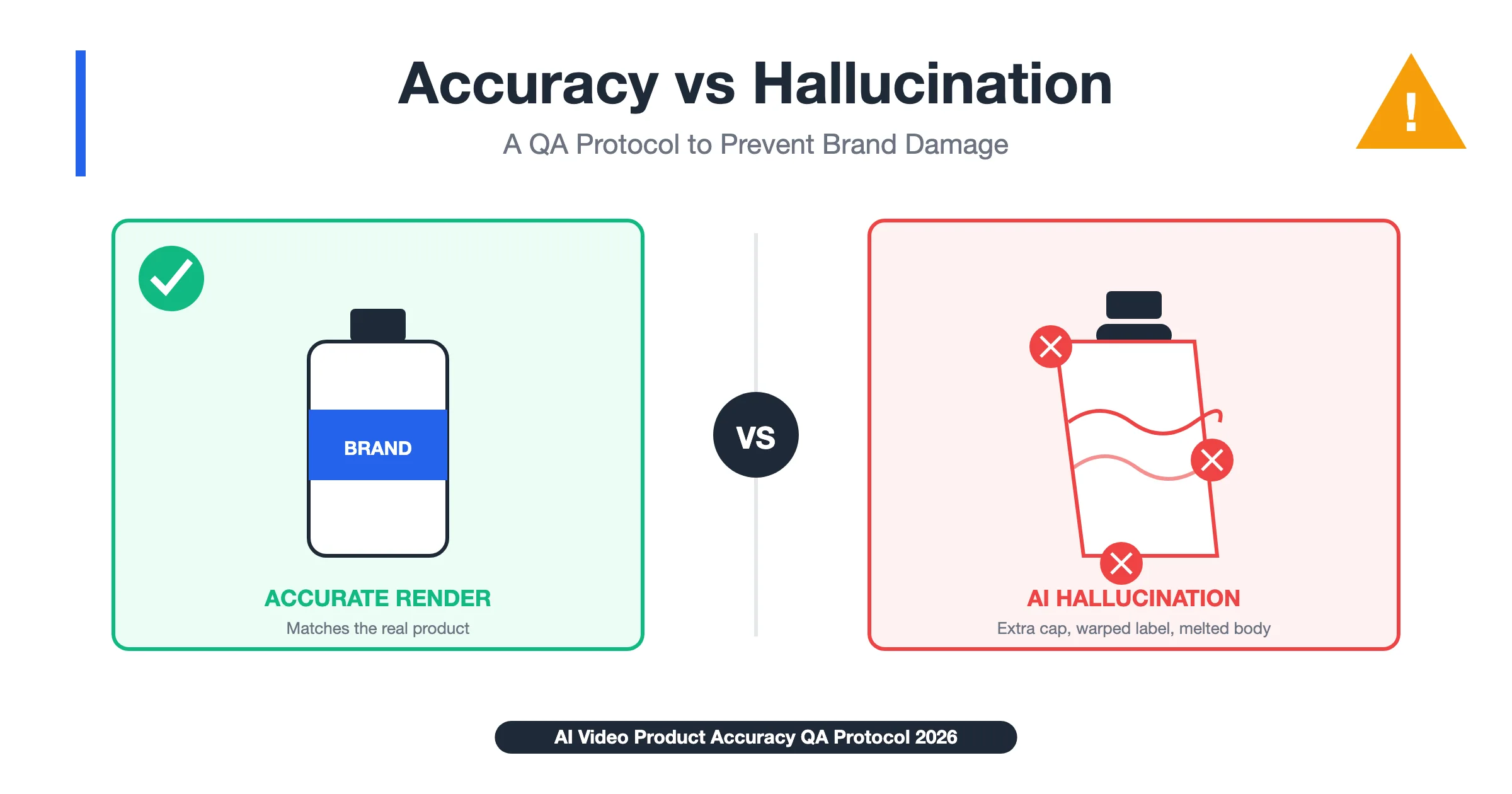
A $20 AI-generated ad might waste more budget than a $200 human-made one if it passes quality checks but fails to persuade. Product accuracy is where AI video most often fails—and where brand damage becomes real.
AI video tools promise scale and consistency, but they also introduce new failure modes: product color shifts, text distortion, impossible physics, logo misplacement. These errors don't just look unprofessional; they erode trust and increase returns when customers receive products that don't match ad expectations.
This article provides a practical QA protocol for ensuring AI-generated videos maintain product accuracy before you spend ad budget on them.
Common AI Hallucination Failure Modes
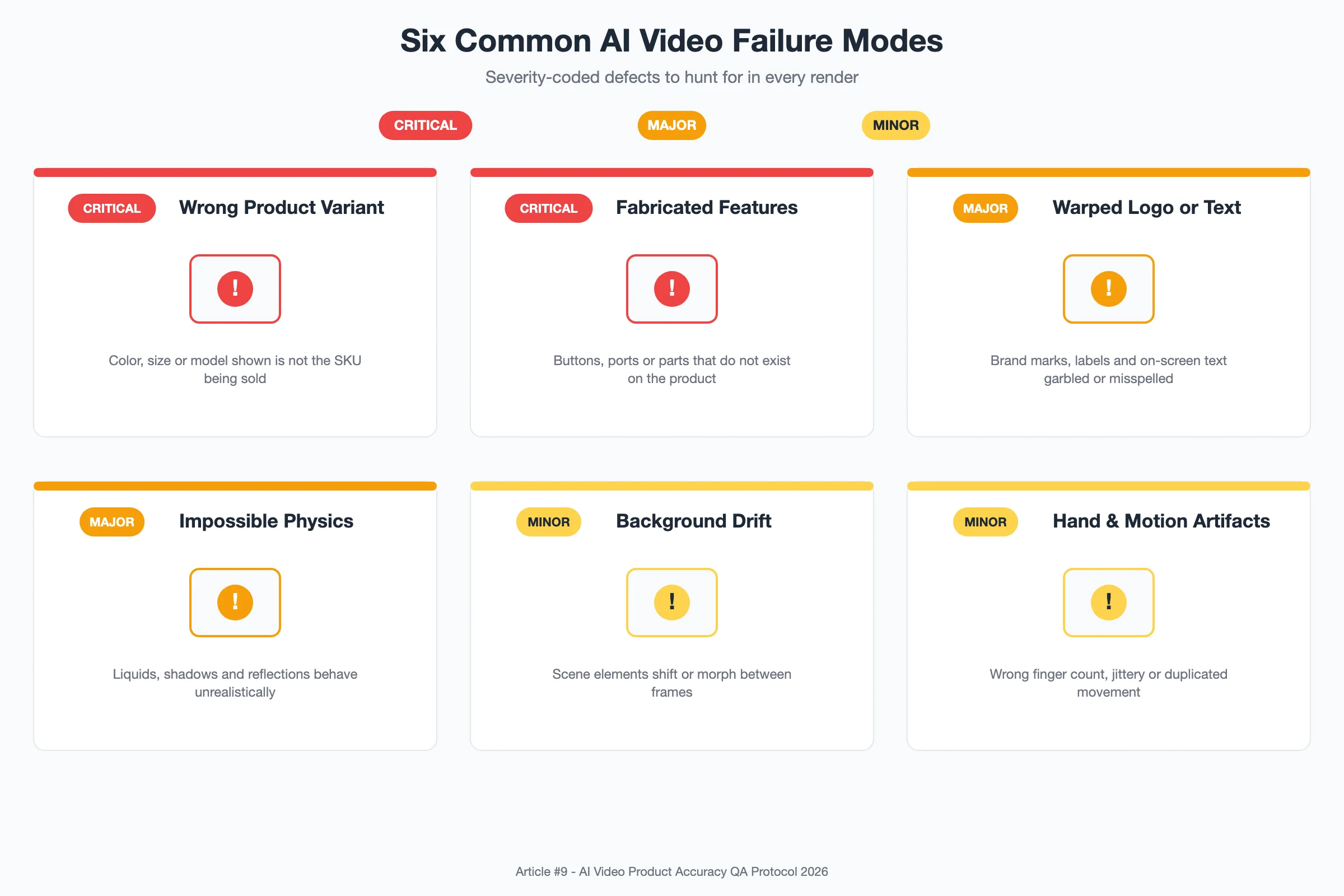
Based on analysis of AI video generation outputs across multiple platforms (Runway, Pika, HeyGen, D-ID), these are the most frequent accuracy failures:
Product color shifts: Red products appearing orange, blue appearing purple, metallic finishes looking matte. This occurs because AI models interpolate colors based on training data rather than your actual product specifications.
Text distortion or misspellings: Brand names, feature claims, pricing information garbled or incorrect. AI struggles with rendering legible text, especially in non-Latin scripts or complex typography.
Impossible physics: Liquids flowing upward, objects floating without support, shadows not matching light sources. These errors signal "fake" to viewers even if they can't articulate why.
Logo misplacement or distortion: Logos stretched, rotated incorrectly, partially cut off, or placed on wrong product surface. Brand consistency breaks down quickly.
Feature addition/removal: Extra buttons appearing on devices, zippers disappearing from jackets, handles added to products that don't have them. These errors create customer confusion and increase return rates.
Proportion errors: Products appearing larger/smaller than reality, aspect ratios distorted, scale relationships broken (e.g., phone looks like tablet).
The cumulative effect: Viewers may not identify specific errors but sense something "off," reducing conversion rates and increasing skepticism.
Visual Accuracy Checklist
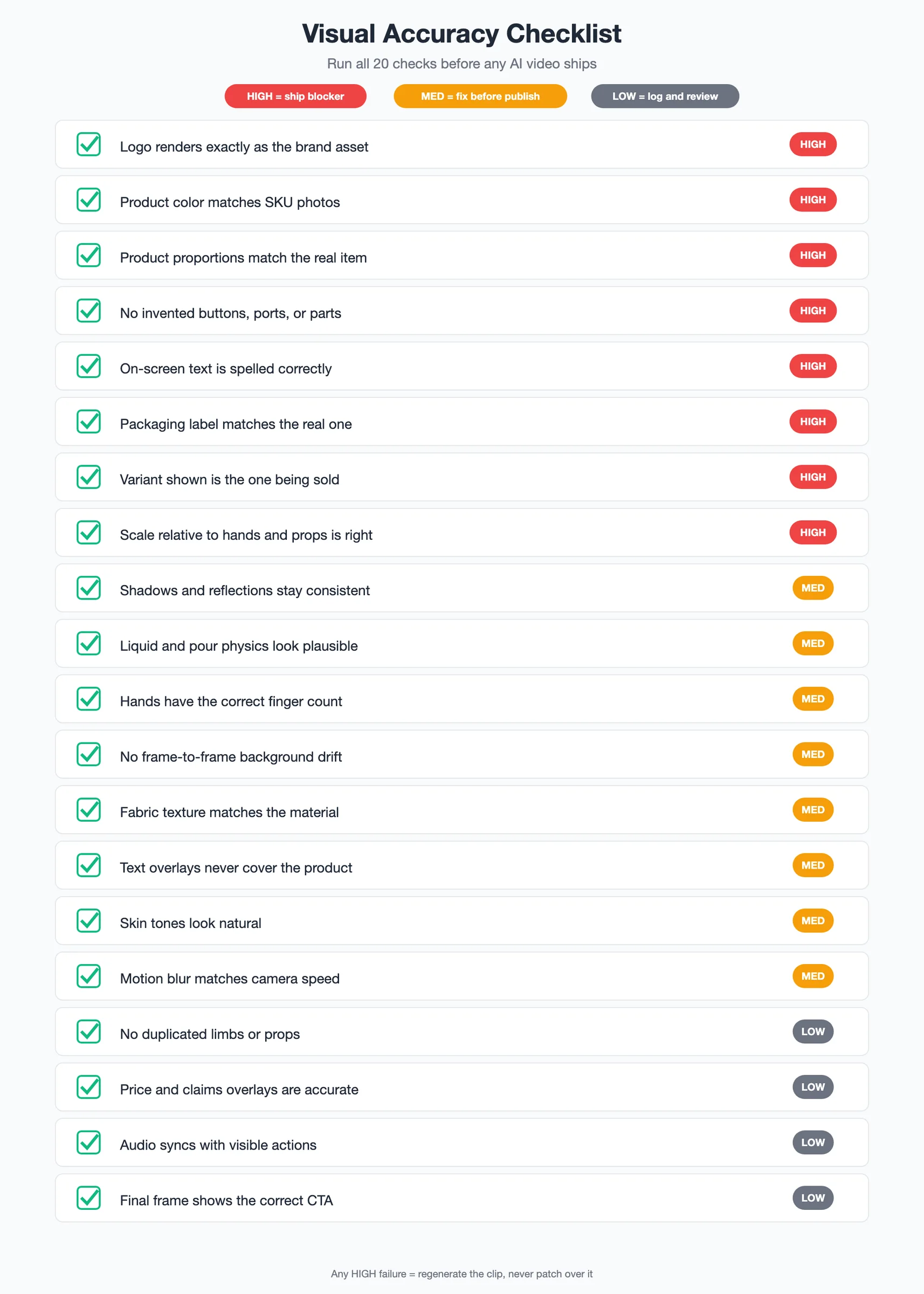
Before running any AI-generated creative, verify these elements:
Color verification:
- Primary product color matches reference image within acceptable tolerance (±10% hue shift)
- Secondary colors and accents accurate
- Metallic/shiny finishes rendered appropriately (not flat matte)
- Lighting doesn't alter perceived color (no unwanted warm/cool casts)
Text legibility:
- All text readable at native video resolution (not pixelated or blurred)
- Spelling accurate including brand names and claims
- Font style appropriate to brand guidelines
- Text placement doesn't interfere with key visual elements
Physics plausibility:
- Objects behave according to real-world physics (gravity, weight, momentum)
- Shadows consistent with light source direction and intensity
- Reflections and refractions realistic
- No floating or levitating objects unless explicitly stylized
Brand integrity:
- Logo correctly positioned and sized per brand guidelines
- No unauthorized modifications to brand assets
- Color palette consistent with brand identity
- Tone and aesthetics align with brand personality
Feature completeness:
- All product features accurately represented (buttons, zippers, ports, etc.)
- No extra features added that don't exist
- Product proportions correct relative to human scale or known references
- Material textures appropriate (fabric vs metal vs plastic)
Fail any item above, and the video needs revision before spend. This isn't about perfection—it's about avoiding unnecessary waste.
QA Workflow Integration Points
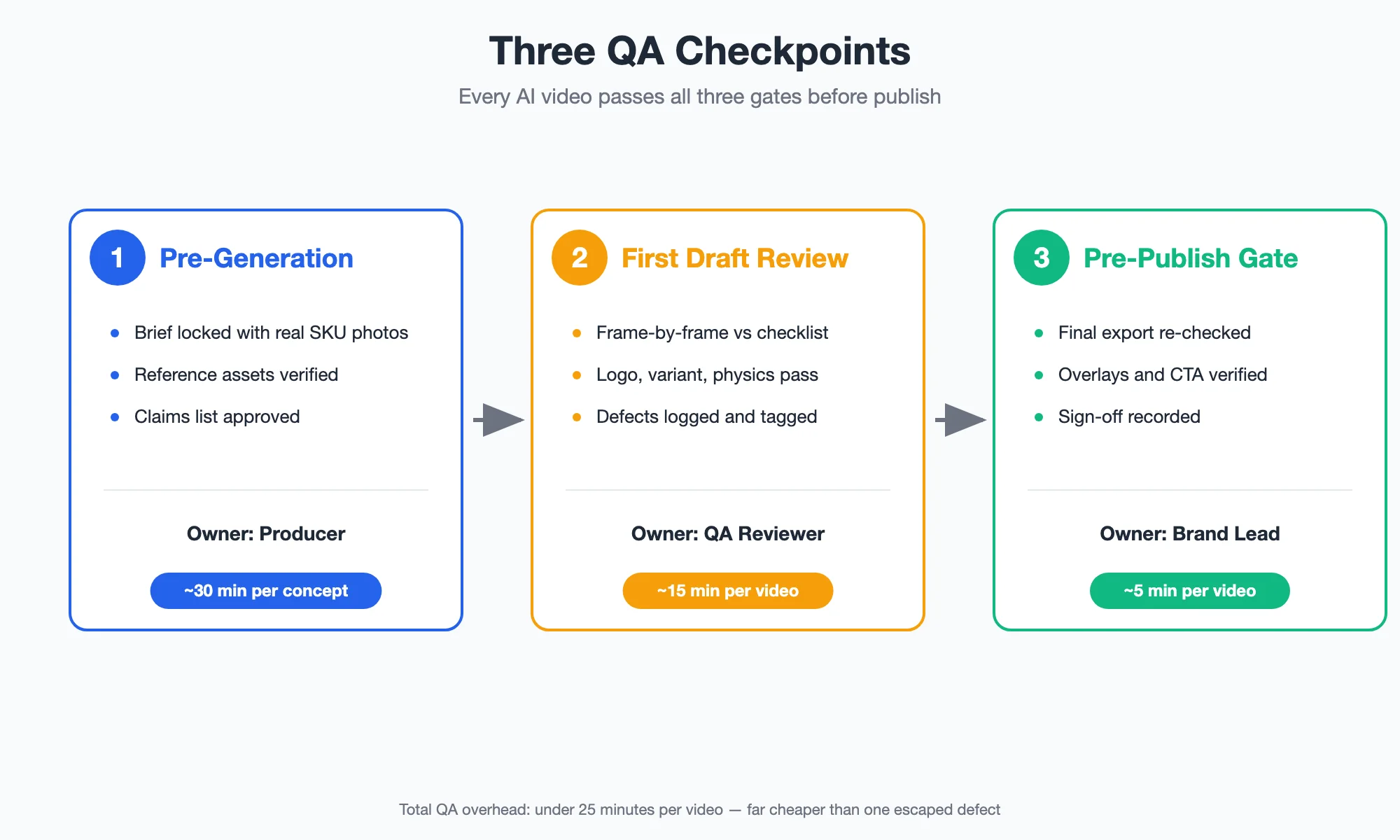
Where should quality checks happen in your production workflow?
Pre-generation prompt review: Before generating video, document exact product specifications:
- Product name and SKU
- Exact color codes (HEX/RGB values)
- Key features to highlight
- Brand elements required (logo placement, tagline)
- Proportions and scale references
This creates baseline against which to evaluate output. Without documented specs, you're checking against vague mental images.
Post-generation visual check: Within 5 minutes of receiving generated video:
- Compare against reference images side-by-side
- Check each checklist item systematically
- Document specific failures (color shifted X%, text misspelled as Y)
- Decide: approve, request revision, or regenerate
Don't wait hours or days to review—context fades and you'll overlook errors.
Pre-spend final approval: Before adding video to ad campaign:
- Second pair of eyes reviews (different person than who did initial check)
- Test video on actual mobile device at native resolution
- Verify all clickable elements and CTAs display correctly
- Confirm no policy violations (claims, imagery, music licensing)
This two-stage review catches errors that slip through initial check.
Human-in-the-Loop Essential for Complex Products
Simple products work well with AI-only workflows: cleaning cloths, basic apparel, standard accessories. These have few features, straightforward colors, minimal branding complexity.
Complex products require human oversight: electronics with multiple buttons/interfaces, skincare with ingredient claims, fitness equipment with safety considerations, jewelry with intricate details.
Why human review matters for complex products:
Technical accuracy: AI may render a smartphone screen showing wrong app interface, or medical device displaying incorrect controls. Human subject matter expert verifies technical details.
Claim compliance: AI might generate "cures acne in 24 hours" when actual claim is "helps reduce acne." Legal/compliance review essential for regulated categories.
Safety implications: Fitness equipment missing safety warnings, electrical products shown with exposed wires—these create liability exposure beyond brand damage.
Brand nuance: Luxury products require specific aesthetic treatment; AI may make premium product look mass-market through inappropriate styling or lighting.
Recommended human involvement levels:
- Light touch (review only): Generate AI variations, human selects best 2-3 for minor refinements
- Moderate touch (guided generation): Human provides detailed prompts and reference materials, AI generates, human approves
- Heavy touch (hybrid production): Human creates core concept and storyboards, AI handles repetitive tasks, human completes final assembly
Choose level based on product complexity and brand risk tolerance.
Failure Mode Analysis by Product Type
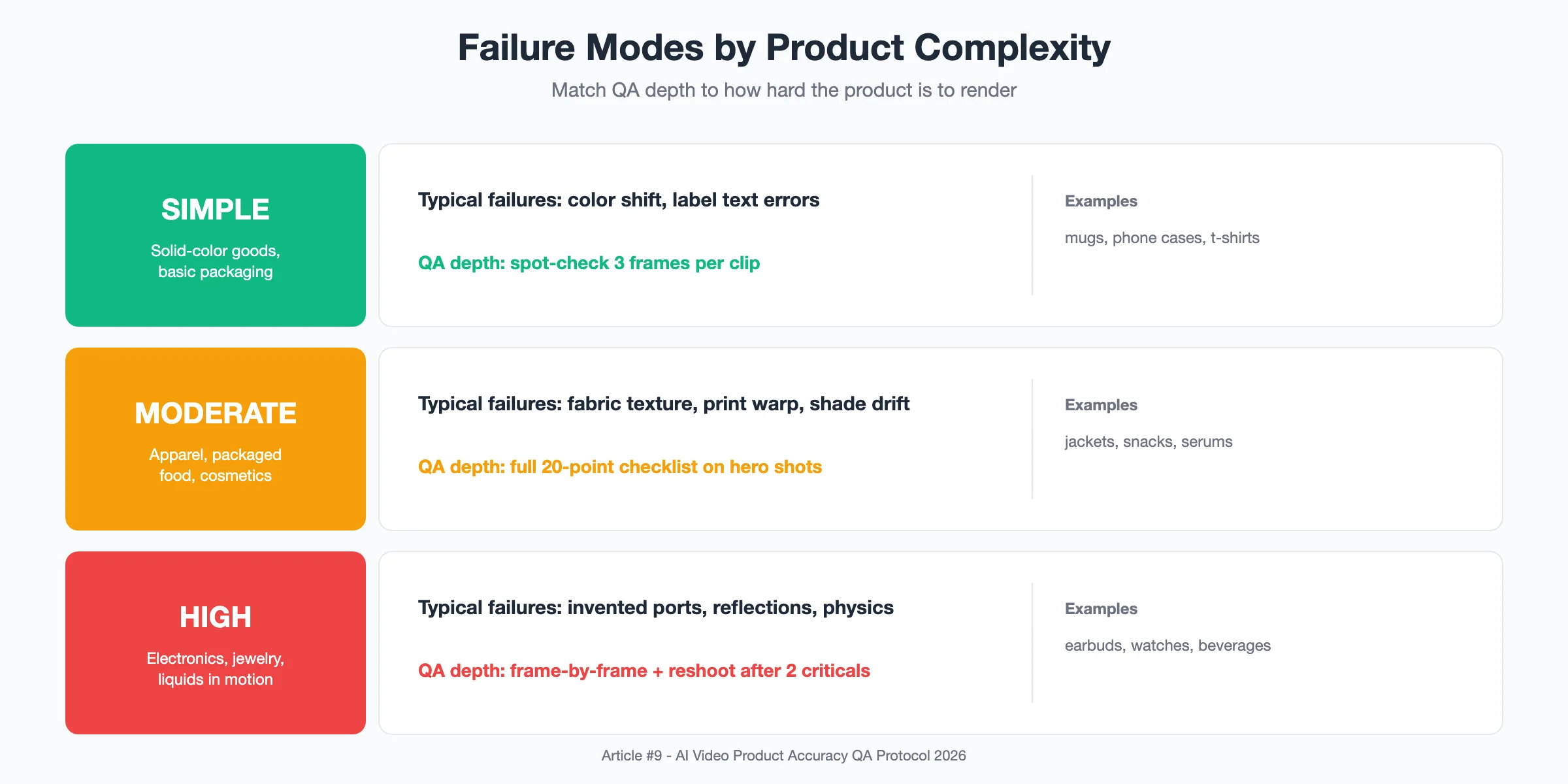
Different product categories face different accuracy risks:
Simple products (low risk):
- Examples: Cleaning products, basic accessories, kitchen gadgets
- Common failures: Color shade variation, minor text spelling
- Mitigation: Automated color checking + basic text verification sufficient
- Human review frequency: Every 10th video
Moderate complexity (medium risk):
- Examples: Apparel, beauty products, home decor
- Common failures: Fabric texture inaccurate, logo placement off, feature omission
- Mitigation: Side-by-side comparison with product photos required
- Human review frequency: Every 3rd video
High complexity (high risk):
- Examples: Electronics, fitness equipment, jewelry, cosmetics with claims
- Common failures: Technical details wrong, safety warnings missing, claims overstated
- Mitigation: Subject matter expert review mandatory before any spend
- Human review frequency: Every video (100% coverage)
Match review intensity to failure risk. Don't over-review simple products (wastes capacity); don't under-review complex products (risks brand damage).
Cost of Errors: Why QA Matters
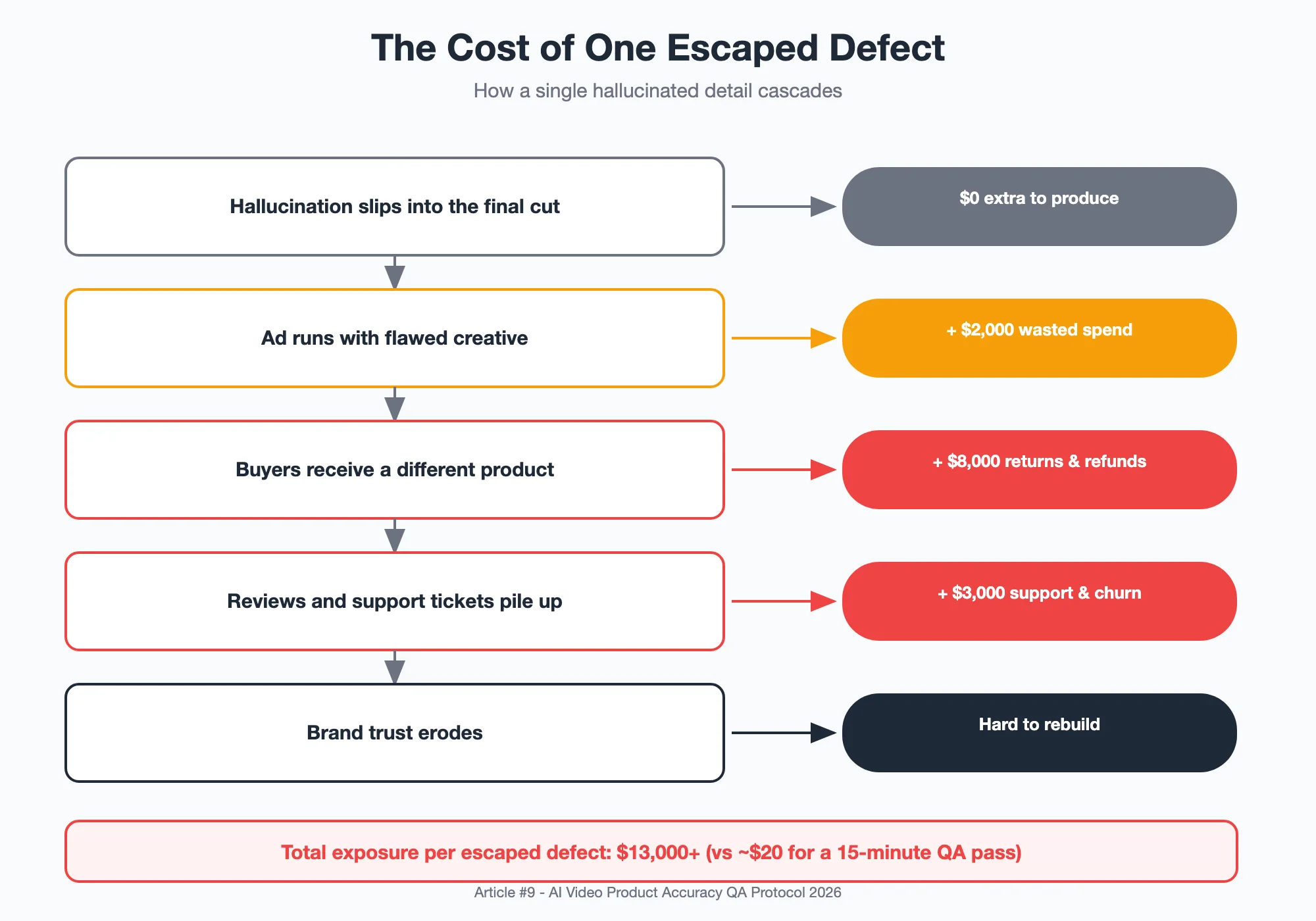
Skipping QA seems efficient until errors surface during active campaigns:
Direct costs:
- Wasted ad spend on inaccurate creative ($500-$5,000 typical campaign budgets)
- Increased return rates (customers expecting different product than advertised)
- Customer service time resolving confusion and processing returns
Indirect costs:
- Brand credibility damage (harder to recover than acquisition cost)
- Negative reviews mentioning "not as shown in ads"
- Reduced conversion rates on subsequent campaigns (audience skepticism)
Example scenario: You launch AI-generated video for $5,000 ad campaign without QA. Product appears 20% larger than reality. After 3 days:
- Ad spend: $5,000
- Returns due to size discrepancy: 15% of orders
- Refund cost: $2,250
- Customer service time: 20 hours @ $50/hour = $1,000
- Negative reviews: 8 reviews averaging 3 stars mentioning "misleading sizing"
- Subsequent campaign CVR decline: 25% due to skepticism
Total cost: $8,250+ plus long-term brand impact. A 30-minute QA check could have prevented this.
The Real Question: Is Your Product Simple Enough for AI-Only?
Before committing to AI-only production, ask:
-
How many distinct features does your product have? Fewer than 5? AI-only likely safe. More than 10? Human review essential.
-
Are color variations critical to purchase decision? Yes (fashion, paint, cosmetics)? Require human color verification. No (commodities, basics)? AI color variance acceptable.
-
Do you make performance or health claims? Yes (skincare, supplements, fitness)? Legal review mandatory regardless of production method. No? Standard QA sufficient.
-
Is your brand positioning premium or luxury? Yes (high AOV, status signaling)? Human review ensures aesthetic alignment. No (value-focused)? AI consistency adequate.
-
Can you afford return rate increases from mismatched expectations? If returns already at 15-20%, AI errors push you into unprofitability. If at 5%, AI variance tolerable.
Your answers determine whether AI-only makes strategic sense or whether hybrid approach required. There's no universal answer—but there is a calculable one for your situation.
Sources:
- SitePoint 7 QA Checks for AI Video – Quality assurance principles
- Runway Platform Documentation – AI video generation capabilities and limitations
- Pika Labs Review 2026 – AI video tool analysis
- HeyGen Best AI Video Tools for Ecommerce – Ecommerce-specific use cases